
.avif)

Southeast Asia Collection
Thailand’s waters unfold as a trilogy of rare journeys. From the limestone towers and island culture of the southern Andaman to the manta-rich pinnacles of the far north, and the softer rhythms of the Gulf, each voyage is designed for those who value privacy, expertise, and experiences that cannot be replicated.

Our Destinations

Thailand
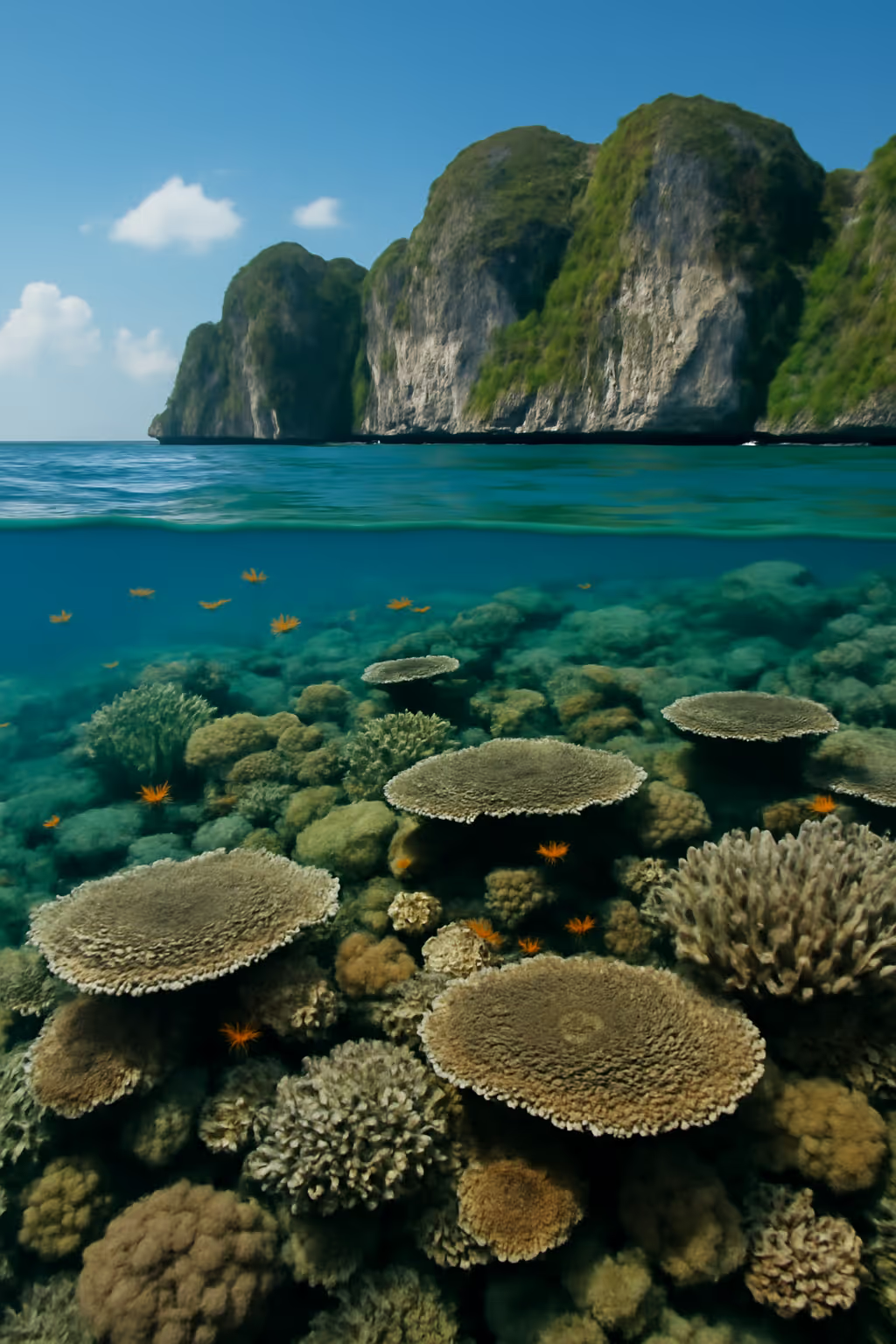
Thailand’s western seaboard remains one of Southeast Asia’s most dependable yachting environments, not because it is dramatic, but because it works. The Andaman coast combines protected waters, cultural access, and established marine infrastructure with very few compromises.
As a cruising area, Thailand is defined by contrast and control. Short passages and sheltered anchorages allow for measured pacing, while offshore island groups introduce scale without operational strain. Routes reward sequencing rather than speed, making this a coast that suits properly designed itineraries, not rushed transits.
Beyond the anchorages, access is immediate and practical. Fishing villages, temples, and inland food cultures remain closely tied to the coast. With the right local handling, movement between yacht and shore is efficient and natural, often within the same day.
From an operational perspective, Thailand is stable and predictable. Entry procedures are clear, services are reliable, and the yachting ecosystem is mature. It is a destination where good planning enhances what is already available rather than compensating for deficiencies.
Indonesia
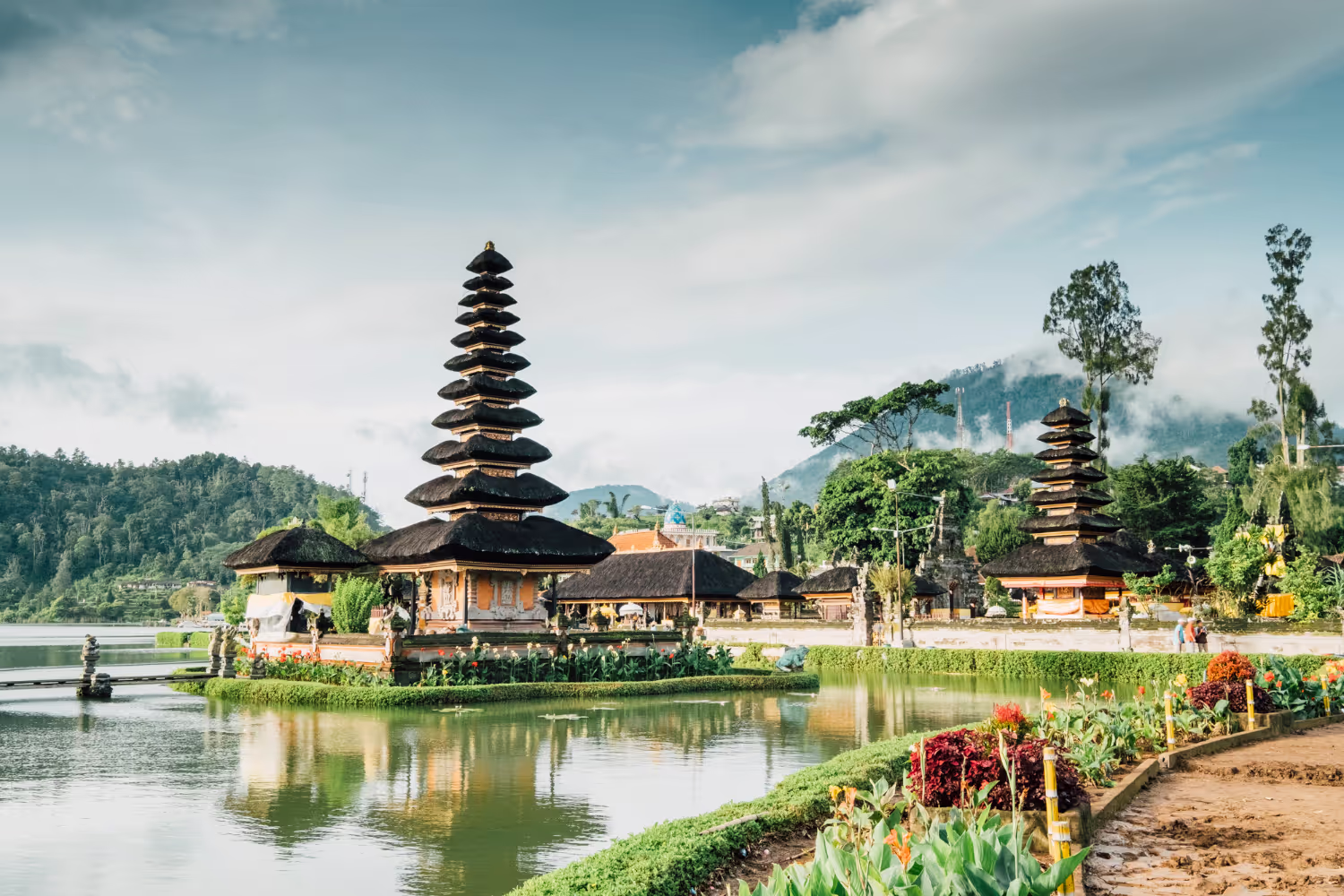
Indonesia must be treated as a series ofregions rather than a single destination. Its strength lies in scale, distance,and the fact that genuine remoteness still exists across large parts of thearchipelago.
Cruising here is deliberate. Distancesmatter, passages require commitment, and each operating area functions as itsown system. This places pressure on route design, but when done properly, theexperience feels earned rather than curated for convenience.
Culturally and environmentally, Indonesiaremains one of the densest cruising grounds in the world. Historic traderoutes, living traditions, and exceptional marine environments exist withminimal mediation. Access requires planning, but engagement is deep and direct.
Operationally, this is not a forgiving environment. Permits, clearances, and support vary by region, and improvisation carries risk. Indonesia rewards precision, preparation, and restraint, and quickly exposes anything less.
Malaysia
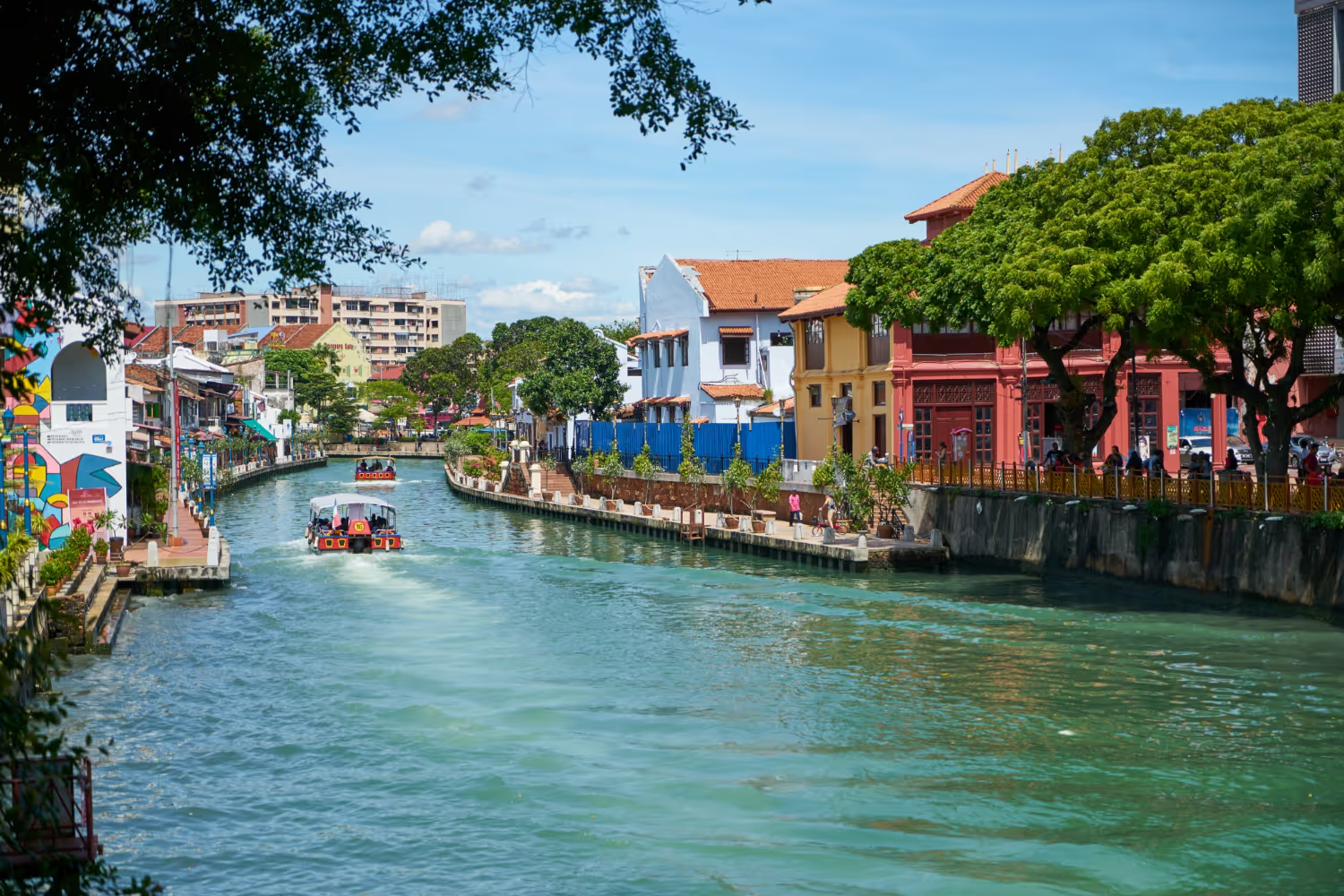
Malaysia is often overlooked, yet from a yachting perspective it is one of the region’s most straightforward operating environments.
The cruising geography supports relaxed routing. Protected archipelagos, mangrove systems, and manageable distances allow for flexibility without unpredictability. Conditions are generally stable, and anchorages are varied without being demanding.
Experientially, Malaysia is quiet rather than performative. Cultural influences overlap naturally along the coast, and inland rainforests and wildlife areas remain closely connected to maritime routes. Engagement is subtle, not staged.
Operationally, Malaysia is efficient and yacht friendly. Regulations are clear, services reliable, and infrastructure discreet but effective. It works well as a foundation, a transition point, or a stabilising leg within wider Southeast Asia itineraries.
Vietnam
Vietnam’s northern coastline offers acruising environment shaped by geology and regulation rather than leisure infrastructure. Ha Long and Lan Ha Bays are defined by vertical limestone formations, confined waters, and constant visual pressure rather than distance.
As a cruising area, it is compact and demanding. Distances are short, but navigation is precise and timing matters. The landscape changes rapidly, rewarding slow movement and disciplined pacing rather than extended passages or flexible routing.
Culturally, engagement is immediate and concentrated. Markets, temples, and daily coastal life sit close to the waterline, allowing meaningful interaction without long transfers. Food culture is not an accessory here; it becomes one of the primary reasons to operate in the region.
Operationally, Vietnam is tightly controlled. Permissions, routing, and scheduling must be fixed in advance, with limited tolerance for deviation. Once established, execution is consistent and predictable. This is not a flexible cruising ground, but for well prepared yachts it delivers depth within clearly defined boundaries.

.avif)
.jpg)
.jpg)
.jpg)
.jpg)
.jpg)


